
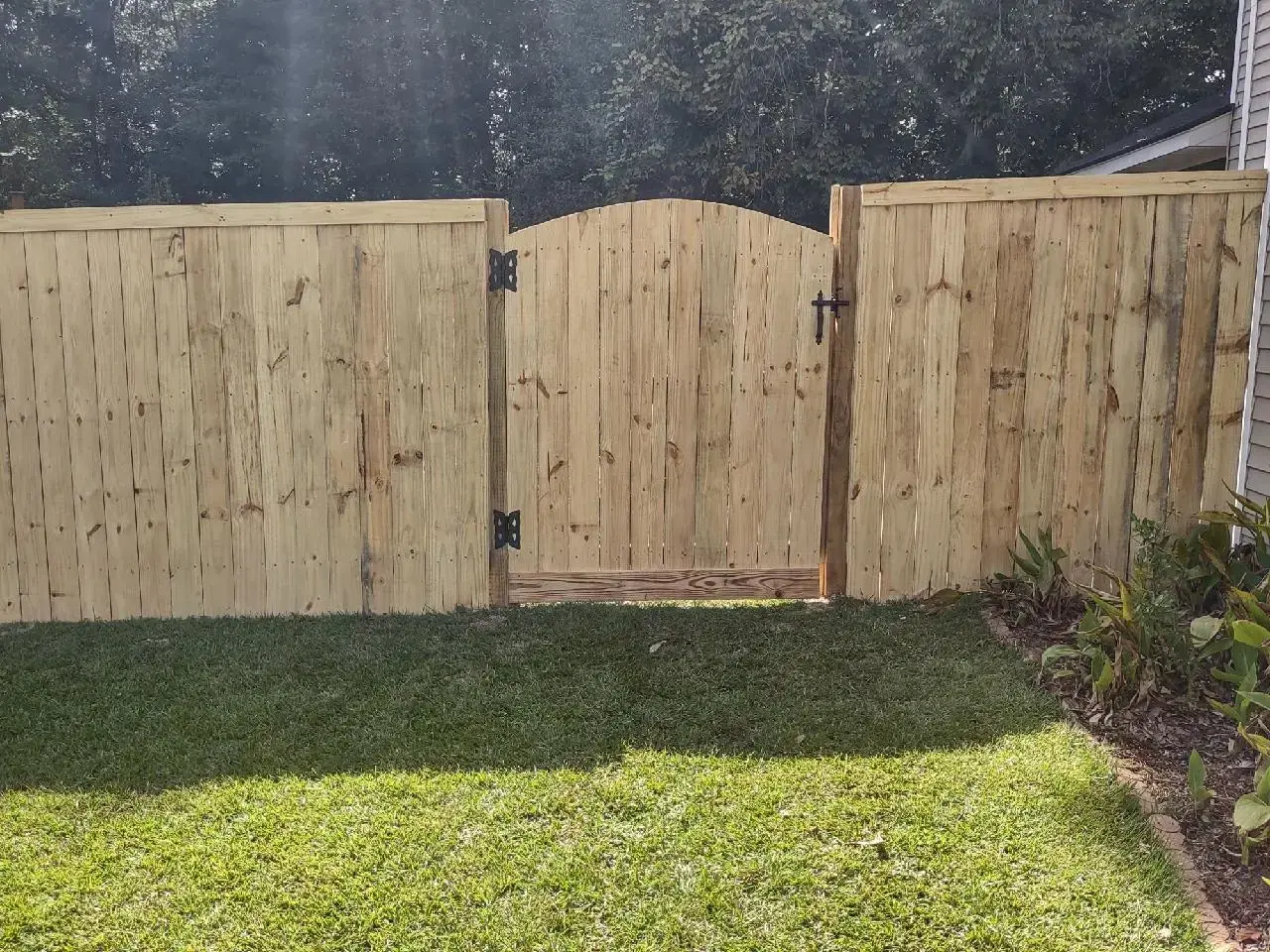
The Lowcountry is hard on a fence in ways an inland yard never sees. Salt in the air, humidity that lingers for months, driving summer storms, and soil that shifts with the water table all work on a fence year after year. Good fence maintenance in Charleston is less about heavy effort and more about staying ahead of the coast before it gets ahead of you. A fence that gets a little attention on a schedule tends to outlast one that gets ignored until something fails. Here are the tips that matter most for a Lowcountry property.
Rinse the Salt Off More Than You Think You Need To
Salt air is the quiet problem near the coast. It settles on everything, and on a fence it speeds up corrosion on metal and leaves a film on wood and vinyl that holds moisture against the surface. A periodic rinse with a garden hose knocks that salt film off before it does its slow work, and it is the cheapest fence maintenance habit you can build. Homeowners closer to the water tend to need this more often than those a few miles inland, since the salt load drops off with distance. The point is to not let salt sit on the fence for months at a stretch.
Keep Wood Sealed and Stained on a Schedule
Wood is the material that asks the most in this climate, and staining and sealing are what keep it standing. Humidity and rain drive moisture into unsealed wood, which leads to swelling, warping, and eventually rot, while the summer sun fades and dries the surface. A quality stain and sealer creates the barrier that slows all of that, and in the Lowcountry that coating tends to need refreshing more often than the back of the can suggests. Carolina Fence Company handles staining, painting, and sealing, so keeping the barrier fresh does not have to be your weekend project. A fence that stays sealed typically holds up far longer than one left to weather on its own.
Watch the Base Where Moisture Collects
Most fence problems start at the bottom. The base of a post sits where water pools, where soil holds moisture, and where mulch or grass clippings can pile up and trap dampness against the material. Keeping the area around the base clear lets the fence dry out between rains rather than sitting wet. Pull vegetation back from the fence line, avoid piling mulch against the posts, and make sure sprinklers are not soaking one section every day. On the coast, where the ground stays damp longer, this small habit makes a real difference in how long the posts last.
Watch for Rust on Metal Sections
Ornamental iron and aluminum both belong in Lowcountry yards, but iron in particular needs watching near salt air. Catching a spot of surface rust early, before it spreads and eats into the metal, is far easier than dealing with it after it has taken hold. A regular walk along the fence to look for early rust, chips in the finish, or spots where the coating has worn is worth doing a couple of times a year. Aluminum handles the coast with less fuss, which is part of why it is a popular coastal choice, but even it benefits from a rinse and a look.
Trim Back Vegetation and Vines
The Lowcountry grows things fast, and vines, shrubs, and climbing plants that look charming on a fence hold moisture against it constantly and add weight that can push a panel out of line over time. Keeping vegetation trimmed back off the fence lets it breathe and dry, and it keeps you from discovering rot or rust hidden under a curtain of greenery months after it started.
Get Ahead of Hurricane Season
Storm season is the Lowcountry’s real test, and the time to check a fence is before the wind arrives, not after. Walk the line ahead of the season and look for loose posts, wobbling panels, and hardware that has worked loose, since those are the weak points a storm will find first. When a storm does cause damage, Carolina Fence Company handles emergency hurricane and storm repair, including broken posts, panel replacement, and gate fixes, so a downed section gets dealt with properly rather than patched to fail again. Getting the weak points addressed before the season is cheaper and less stressful than dealing with a collapse.
Know When to Repair and When to Replace
Sometimes a fence has simply reached the end, and continuing fence maintenance on it is throwing good time after bad. When posts are rotted through, panels are failing across multiple sections, or the fence no longer stands true, replacement is the honest call. That includes clean tear-out and disposal of the old fence, which Carolina Fence Company handles as part of the work.
Start With a Look at Your Fence
If your fence has taken a few coastal seasons and you are not sure what it needs, the smart move is to seek help from a professional. Call Carolina Fence Company at +1 843 821 0486 or visit 557 B King St, Charleston, SC 29403 for a free quote.