
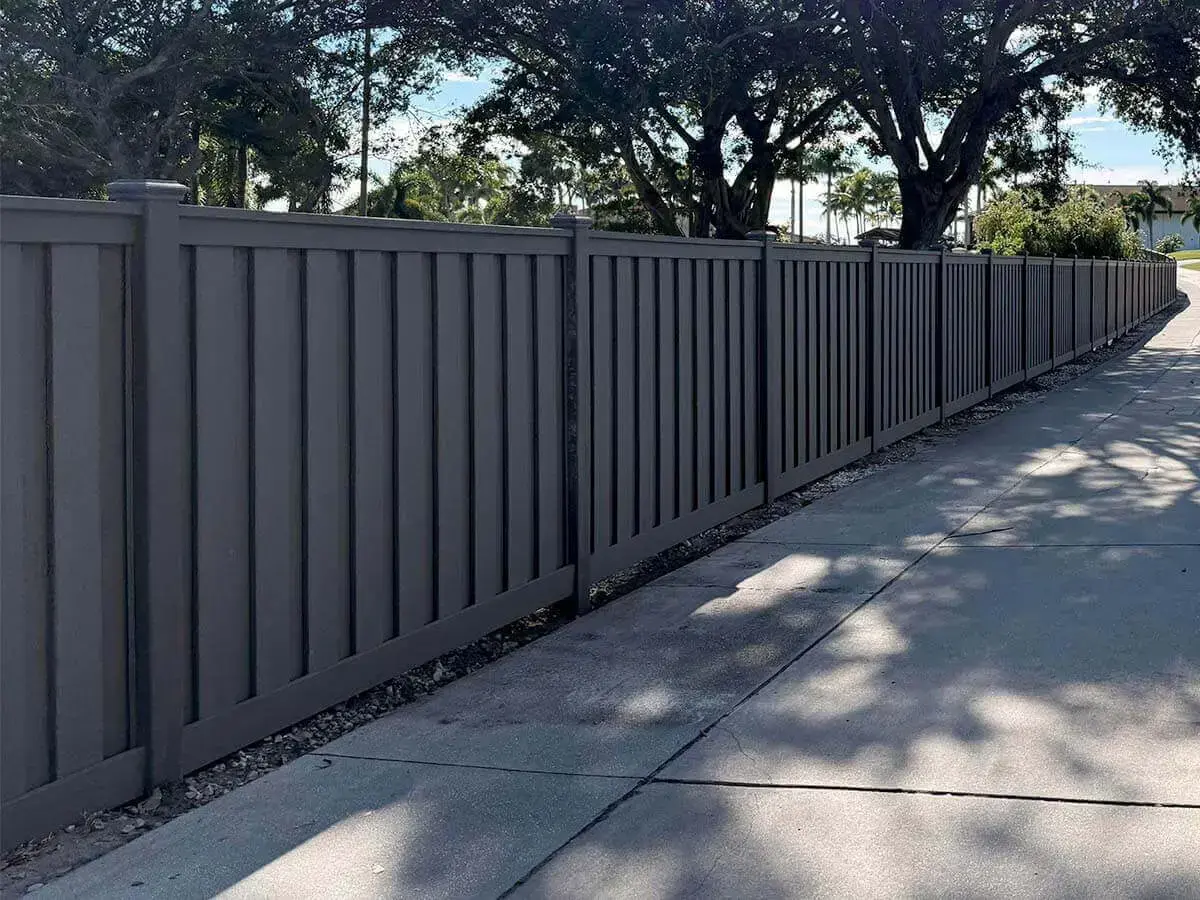
TL;DR: Choose composite fencing by considering the colors already used on your home, then compare samples with your siding, masonry, and trim. A similar undertone often works better than trying to match one color exactly. Check how the fence looks from the street and patio, consider your privacy needs, and confirm which colors and panel styles are available before finalizing the design.
A sample that looks ideal indoors may appear different beside a brick wall in natural light. For a Summerville home, use the house as your starting point and choose a fence that complements it. The goal is to make the fence feel consistent with the entire yard, not just the area where you compare samples.
Start With One Exterior Feature
Start by identifying the feature that stands out most from the street, whether it is siding, brick, stone, or a large area of painted trim. Use it as your reference when choosing a fence color. Composite fencing does not need to match it exactly. If your home has warm, reddish brick, look for a finish that complements those tones rather than clashes with them.
For a home with cool gray siding and white trim, a cooler neutral may work better. However, color names can be misleading. One gray sample may look blue beside the house, while another may appear brown. Compare samples against the actual exterior before deciding which options work best.
Decide Whether the Fence Should Blend or Frame the Yard
A lighter available finish can make a fence feel less imposing beside pale siding or a small patio. However, it may show dirt from splashing soil more easily. A darker finish can create a defined boundary around the yard, but it may draw more attention to a long, uninterrupted fence line.
View the fence from the front walk and your usual outdoor seating area. Consider whether you want it to blend into the surroundings or frame the view. Choose a finish that suits your everyday needs rather than relying on a catalog photo.
Let Height and Panel Style Serve a Purpose
Color cannot compensate for a fence that feels too tall beside the house or too open for your needs. Before choosing composite fencing, decide where you need privacy and where you want to preserve a view. A solid layout can provide more privacy around a seating area, while an open design, if available, may suit a space where you want to keep the landscape visible.
Post spacing, top edges, and gate placement also affect the overall look. Ask which configurations are available rather than assuming every height or style is offered. Check applicable property rules before finalizing the layout.
Make the Fence Work With the Landscape
Look beyond the house itself. Walkways, patio surfaces, garden beds, and existing trees can occupy as much of your view as the siding. If the patio has warm-toned stone, a fence in a similar tone may help connect the outdoor space to the house. If the landscaping is the main attraction, a more understated finish may complement it without drawing attention away from the plants.
Place a composite fencing sample where the fence will stand, then step back and compare it with the surrounding plants and paving. A subtle color on a small sample may look much more prominent across the entire yard.
Test Real Samples in More Than One Light
Ask which colors and finishes are available to order. Take samples outside rather than relying on a screen, and compare them in morning light, shade, and late-afternoon light. Photograph the area for reference, but make your final decision with the sample in front of you.
Composite fencing can eliminate the need for repainting associated with wood, but it still requires cleaning. Ask about maintenance for the specific product and consider how the color will look with everyday dust and splashes. A good match should continue to suit your home long after the new fence is installed.
For a new fence in Summerville, call Carolina Fence Company at 843-821-0486 to discuss composite fencing options for your property. Ask about available colors, finishes, panel styles, and gate designs to help you choose an option that complements your home and outdoor space.